Download Trope for Ki Tissa Torah Reading
 | | ||
 | |||
 | |||
| | |
|
| ||||||||||||||||
| | |
| Click on the Parashah proper noun to read the summary: |
| | |
| |
| | |
| Concluding the Book of Exodus... |
| | |
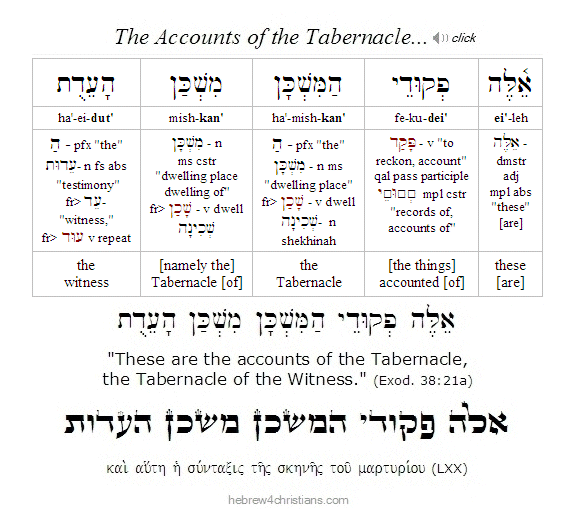
| Parashat Pekudei ( פרשת פקודי ) is the final portion of Sefer Shemot, or the Book of Exodus. Information technology begins with Moses' accounting of all the materials that were donated for the structure of the Mishkan (i.e., Tabernacle). Moses starting time recorded the inventory of the different building materials and furnishings, and so he carefully checked the special priestly garments. After all the work was confirmed to exist in complete accord with the LORD's instructions, Moses blessed the people. The LORD and so commanded Moses to assemble the Mishkan on "the first month in the 2d twelvemonth [from the appointment of the Exodus], on the first day of the month" (i.e., on Nisan i, or Rosh Chodashim, Exod. 40:17). Since Moses gave the commandment to brainstorm building the Tabernacle on the mean solar day afterwards Yom Kippur (i.e., Tishri 11), this implies that information technology took less than six months for Betzalel and his squad to create the Tabernacle and all its furnishings. Once the Tabernacle was completed and all its vessels were accounted for and inspected, Moses anointed all its components with the sacred anointing oil, called shemen ha-mishchah (note that the discussion "mishchah" ( מִשְׁחָה ) comes from the same root as "Messiah" ( מָשִׁיחַ ), indicating that the Mishkan (i.e., Tabernacle) would foreshadow God'southward programme of redemption given in Yeshua). Moses and so formally initiated Aaron and his iv sons into the priesthood, marking their easily and feet with sacrificial blood and "waving them" before the Lord to moving picture resurrection. The Divine Presence - manifest equally the Shekhinah Cloud of Glory � then filled the Holy of Holies in the Tent of Meeting. The Book of Exodus ends: "And Moses was non able to enter the Tent of Meeting because the cloud settled on information technology, and the Glory of the LORD ( כְּבוֹד יְהוָה ) filled the Mishkan ( הַמִּשְׁכָּן ). Throughout all their journeys, whenever the Deject was taken upward from over the Mishkan, the people of State of israel would set out. Just if the Deject was non taken upwards, and then they did not set out till the day that it was taken upwards. For the Cloud of the LORD ( עֲנַן יְהוָה ) was on the Mishkan by day, and Fire was in it past night, in the sight of all the house of Israel throughout all their journeys" (Exod. 30:35-38). The Presence of the Glory of God that descended from Sinai upon the newly defended Mishkan represented a climactic moment for the fledgling nation, since the Sin of the Golden Calf had jeopardized whether the God would indeed dwell within the midst of the camp of Israel... Recall that it was only after Moses had returned from Sinai bearing the 2d set up of Tablets (on Yom Kippur) that the glow of the LORD'due south redeeming dearest radiated from his face, and new hope was given to Israel (prefiguring the New Covenant). The Rex of Glory would accompany the people from Sinai to the Promised Country! (The narrative continues in the Volume of Numbers, beginning exactly i calendar month after the Mishkan was assembled.)
|
| | | |
| Rosh Chodesh Adar Sheni | ||
| | |
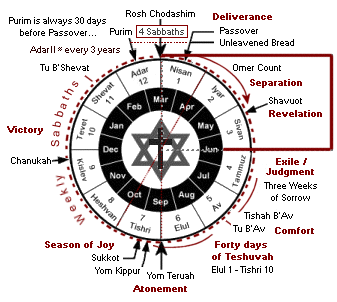
| Notation that Wed., March 2nd 2022 marks Rosh Chodesh Adar Ii ( חודש אדר ), that is, the "thirteenth" month of the Jewish calendar (counting from the month of Nisan). During Jewish "leap years" an additional calendar month is inserted into the Jewish calendar, and the calendar month of Adar is appended past an additional calendar month called Adar Sheni (or Adar Two). From the point of view of the holidays, Adar II is considered the "12th month," so the holiday of Purim, for example, is ever historic during Adar 2 during Jewish leap years.... |
| | | | | | | | | | | | | | | | | | | | | |
 | ||||||||||||||||||||
| Determining a Jewish Leap Yr | ||||||||||||||||||||
| A Jewish leap twelvemonth contains 54 weeks, but a non leap year has only 50 weeks (a leap-yr adds an additional month (chosen Adar II) to the usual 12). To decide whether a given Jewish year is a jump year, you lot will need a reckoner that includes the modern() role. Enter the current Jewish twelvemonth and then perform "mod 19." If the effect is either 0, iii, six, 8, xi, 14, or 17, then information technology is a Jewish leap year. For example, 5782 mod(nineteen) is six, and therefore is a Jewish leap year.... When in doubt, nonetheless, always check a proficient Jewish calendar. | ||||||||||||||||||||
| A Rosh Chodesh Approval | ||||||||||||||||||||
| The post-obit (simplified) approving can exist recited to celebrate the new month and to ask the LORD God Almighty to help you for this coming flavour: יְהִי רָצוֹן מִלְּפָנֵיךָ יהוה אֱלהֵינוּ ye�hee � rah�tzon � meel�fah�ne'�kha � Adonai � Eastward�lo�hey'�noo "May it be Your will, LORD our God and God of our fathers, Download Study Card | ||||||||||||||||||||
| Blessing before Torah Study: | ||||||||||||||||||||
 | ||||||||||||||||||||
| | ||||||||||||||||||||
| Some terms: | ||||||||||||||||||||
| ||||||||||||||||||||
 | ||||||||||||||||||||
| Related Topics: | ||||||||||||||||||||
| ||||||||||||||||||||
| << Return | ||||||||||||||||||||
| Hebrew for Christians | ||||||||||||||||||||
 | ||||||||||||||||||||
| | ||||||||||||||||||||


Download Trope for Ki Tissa Torah Reading
Source: https://hebrew4christians.com/Scripture/Parashah/parashah.html
0 Response to "Download Trope for Ki Tissa Torah Reading"
Post a Comment